
Based on thermal plasma emission, we have estimated the shock velocities which produced the hot plasma in N132D. The resultant velocities are generally lower than those directly measured by a proper motion measurement, partly reaching a factor of four discrepancy. This may suggest that a large fraction of the shock kinetic energy was transferred toContinue reading “Highly efficient particle acceleration inferred in the supernova remnant N132D”
Author Archives: Hiromasa Suzuki
XRISM science meeting #7 in Arizona

An internal team meeting of XRISM (SM7) has been held in Arizona, US. It was the best season for visitors and we had amazingly nice weather. Now that plenty of the science data have been collected, the entire XRISM team is working hard to publish bland new understanding of the universe. Every science team reportedContinue reading “XRISM science meeting #7 in Arizona”
Detection of extended X-rays around microquasar V4641 Sgr with XRISM
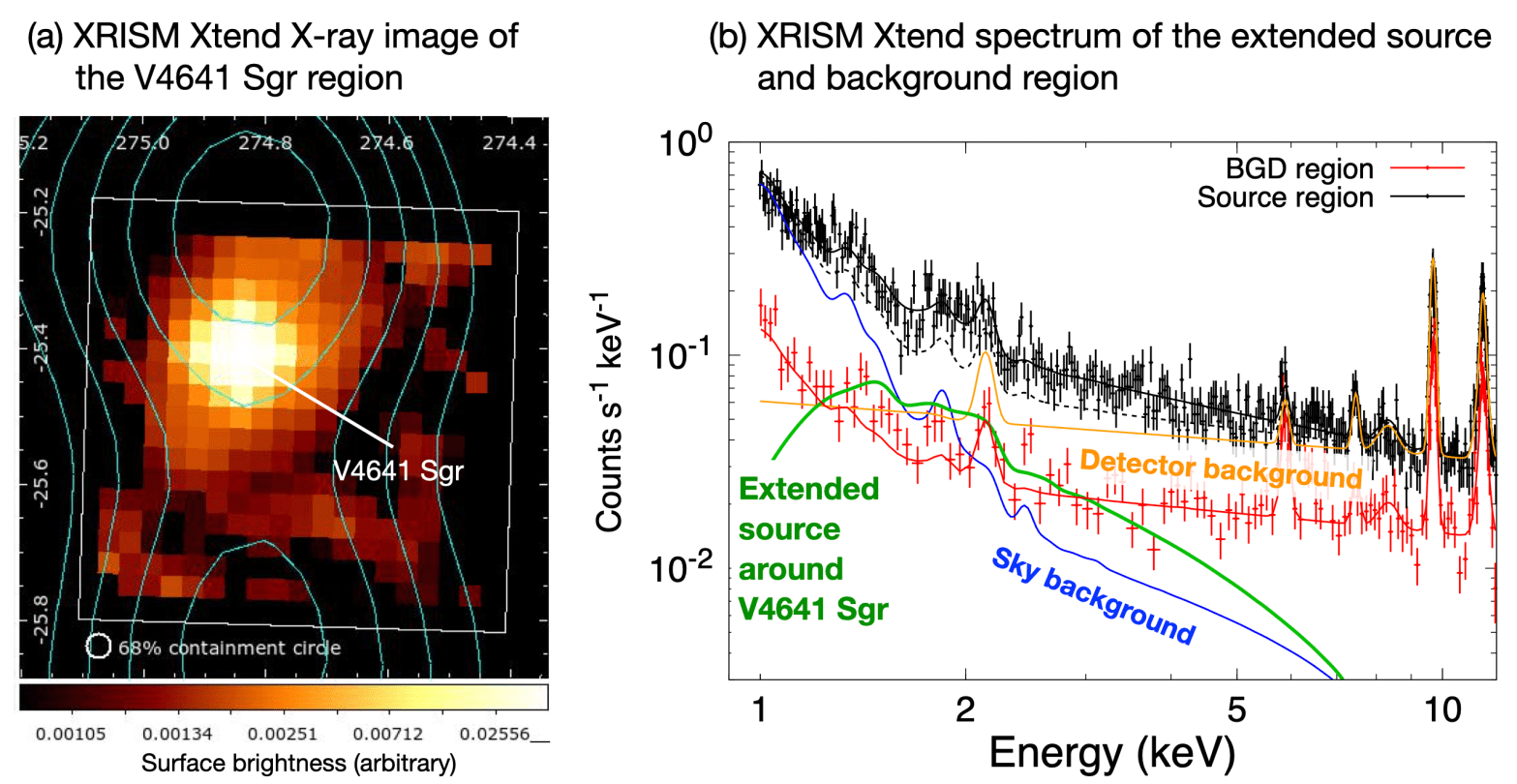
Microquasar V4641 Sagitarii (Sgr) is now of great interest as an efficient cosmic-ray factory, because of the recent discovery of very high energy, extended gamma-ray emission around it with HAWC and LHAASO. Occasionally, XRISM observed this source on Sep 30 as a “generic ToO” target, following its recent outburst. The large field of view andContinue reading “Detection of extended X-rays around microquasar V4641 Sgr with XRISM”
XRISM Collaboration paper on the supernova remnant Sgr A East

Our XRISM paper on the supernova remnant Sagittarius A East (Sgr A East) has been accepted for publication in PASJ as a Letter (ADS). Sgr A East is a remnant located in a unique environment, the immediate vicinity (< a few pc) of the supermassive black hole of our Galaxy, Sgr A*. We are interestedContinue reading “XRISM Collaboration paper on the supernova remnant Sgr A East”
New non-equilibrium thermal plasma model
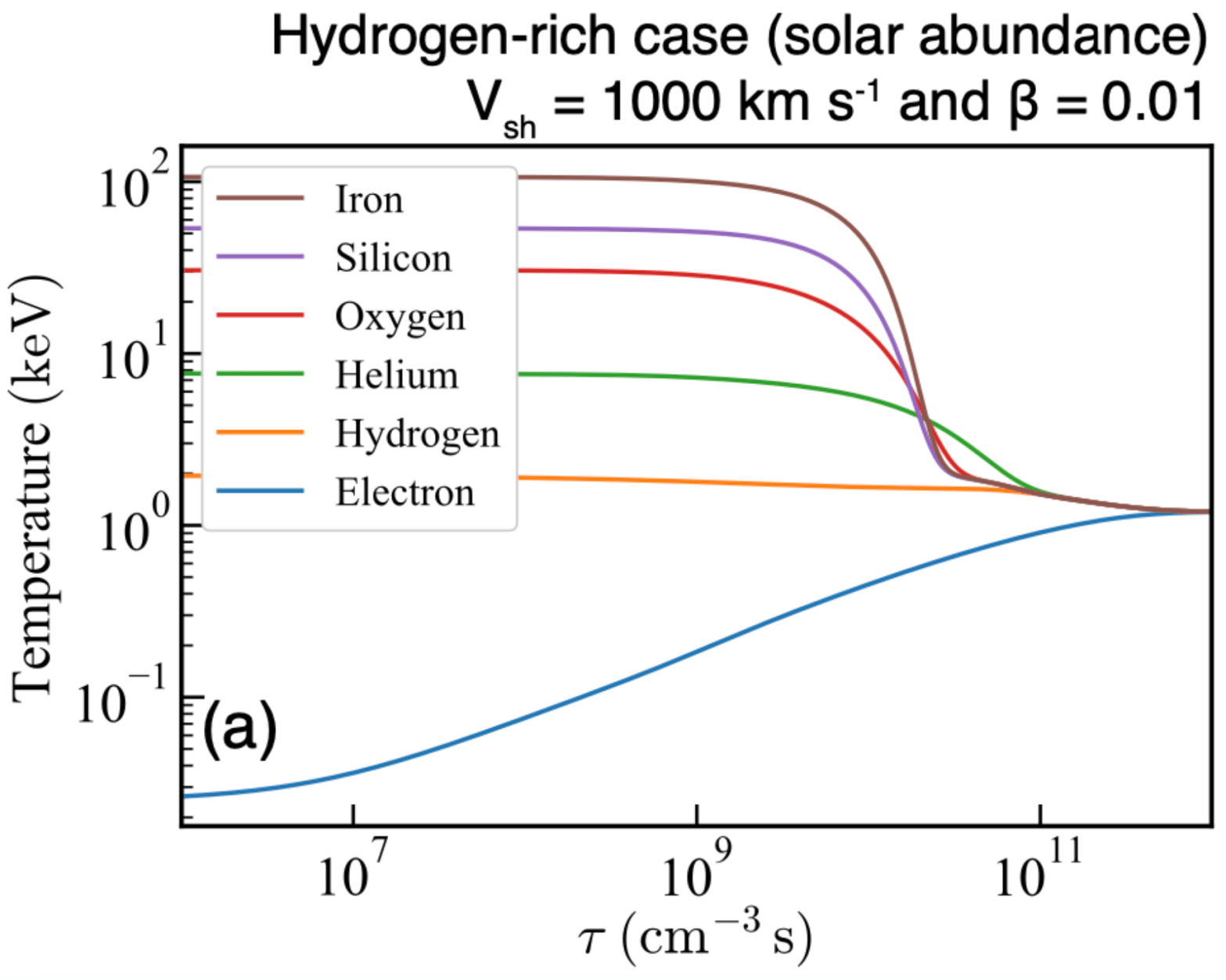
Our team, lead by Yuken Ohshiro (ISAS/JAXA), has developed an optically-thin thermal plasma model which calculates non-equilibrium temperature and ionization processes. The ApJ paper has been published (ADS). This is an updated version of the conventional XSPEC models (nei, rnei), where the electron temperature is assumed to be constant in time.
XRISM science meeting in Japan (SM6)

XRISM team members gathered at Tokyo Metropolitan University to share the latest status of the satellite operations, calibration, and scientific activities. We are still in the early phase of the mission, where the calibration and analysis software are not complete, and thus talking with people with various expertise is of great importance. It was soContinue reading “XRISM science meeting in Japan (SM6)”
XRISM first paper on supernova remnant N132D!
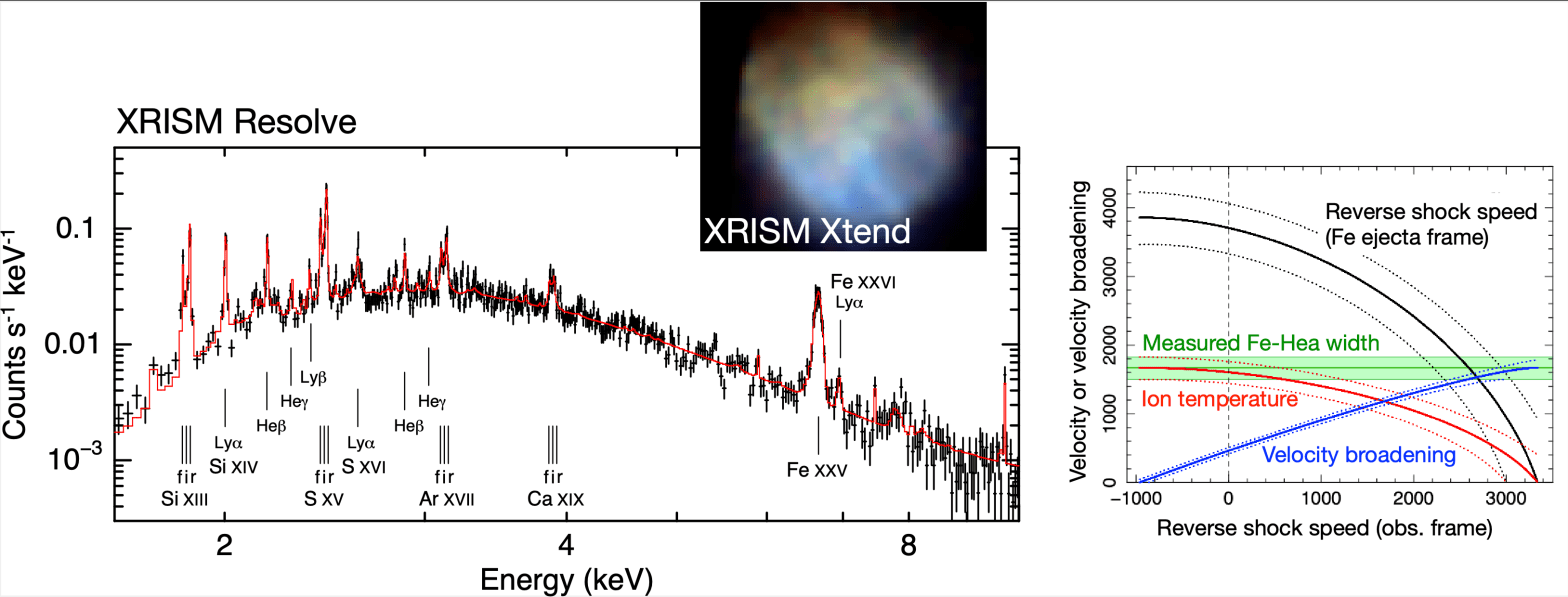
XRISM collaboration’s first paper on the LMC supernova remnant N132D has been accepted for publication in PASJ (ADS link). We successfully constrained the line widths and redshifts, and thereby confidently separated multiple temperature components. The narrow lines of Si, S, and Ar, and a broad Fe Hea triplet can be understood as due to differentContinue reading “XRISM first paper on supernova remnant N132D!”
Fresh wind blows from historical supernova SN1181

Articles about our recent work on the remnant of SN1181 have been published based on our recent work (ADS). We put together our theoretical and observational efforts to understand the peculiar object IRAS 00500+6713. We propose that this object is the remnant of SN1181, which we believe was a type Iax supernova. (article in EnglishContinue reading “Fresh wind blows from historical supernova SN1181”
Paper about initial operations of Soft X-ray Imager on XRISM

Our contribution to the SPIE 2024 proceedings, “Initial operations of the Soft X-ray Imager onboard XRISM” has been published (arXiv, SPIE). While scientific importance is not necessarily high, I hope this paper will work well as a summary of what and how we worked hard on in the commissioning phase of XRISM.
SPIE in Yokohama, Japan

This year’s SPIE conference was held in Yokohama, Japan. I gave a poster presentation about the initial operations of Soft X-ray Imager onboard XRISM. I met a lot of people working on detectors, optics, and satellite missions. In the field of the high energy astrophysics, latest attracting topics seem to include the China’s rapid growthContinue reading “SPIE in Yokohama, Japan”

